
When Did We Stop Building Teams?
The Team That Saved Me — And Why Our Kids Need That Experience More Than Ever
There’s something strange about spending your life inside the world of youth soccer. You see everything—every emotion, every conflict, every transformation—up close. Parents, players, coaches, club directors, referees, league administrators… they’re all part of this ever-moving puzzle.
And because I live in this world day in and day out, I get to see patterns that others might miss. I talk to people across the country, and even across the world, who are fighting the same battles, celebrating the same moments, and worrying about the same things.
What I’ve noticed lately is this:
the meaning of TEAM is slowly slipping away.
But to explain why that matters so deeply, I need to tell you a piece of my own story.
The Kid Who Needed Direction
Growing up, I wasn’t shy or withdrawn—I was athletic, energetic, and hungry for something to pour myself into. I loved sports and threw myself at everything I touched. But like a lot of kids, I ran head-first into the wrong kind of environment early on.
Baseball was my first love.
And it broke me early.
Not because of the game—but because of the politics.
The town team, the coaches, the favoritism… it all chipped away at me long before I ever had the chance to find out who I could become. At an age when sports should’ve been building me up, they left me burnt out, frustrated, and unsure of where I fit.
So I turned to what had always been my secondary sport: soccer.
I didn’t know it then, but that decision would rewrite my entire life.
I didn’t come in with elite skill.
I wasn’t the kid who wowed everyone at tryouts.
What I did have was a willingness to show up, to work, and to give everything I had on every sprint, every drill, every game.
And for the first time, that was enough.
The team welcomed me—not because of politics, not because of who knew who, not because I was a star…but because effort mattered.
Character mattered.
Commitment mattered.
Soccer gave me direction.
It gave me purpose.
It gave me a place where hard work meant something—where I could grow, belong, and build a version of myself that I was proud of.
Those lessons didn’t just shape my playing career; they shaped my leadership, my coaching, and the values I carry into every decision I make today.
They became the compass I still follow.
The Lessons You Learn Without Realizing It
Looking back, I can see them clearly. At the time, I didn’t. I was just a kid trying to keep up. But now, as an adult, I know exactly what that team taught me.
You don’t quit.
No matter the score.
No matter the opponent.
You find another gear, and then another.
You show up.
For yourself.
For the people who count on you.
For the people you count on.
You work harder than you ever thought possible.
I wasn’t naturally gifted. I had to fight for every skill I gained.
But the fight is what made me grow.
You learn honesty.
True honesty—the kind that puts the team above ego.
You learn resilience.
You learn what it feels like to lose, and how to stand back up without bitterness.
You sacrifice.
Sometimes you miss things.
Sometimes you give things up.
But it all means something.
You honor your word.
If you say you’ll be there, you’re there.
Your teammates don’t wonder.
They know.
You learn respect.
For the game.
For the opponent.
For anyone who shows up to fight with you.
And above all… you don’t cheat.
Not your team.
Not the game.
Not yourself.
These aren’t soccer lessons.
They’re life lessons disguised as soccer.
What Worries Me Now
This is the part that’s hard to say, but necessary:
In the last few years, I’ve watched the idea of TEAM start to fade.
Not everywhere.
Not for everyone.
But often enough that it keeps me up at night.
I’ve seen:
-
Kids missing games because they’re playing for another team the same day
-
Players leaving mid-match while their team is already short
-
Parents encouraging kids to hide the real reason they miss practice
-
Players saving their energy for a different game later
-
Kids giving up the moment they fall behind
-
Coaches choosing results over teaching moments
-
Parents pulling kids because they didn’t like the position
-
Coaches afraid to hold players accountable because they fear backlash
And when you add it all up, you start to see the real problem:
We’re teaching kids that commitment is negotiable.
That loyalty is optional.
That honesty depends on convenience.
That the TEAM matters… but only when it fits the schedule.
That’s not what sport was meant to be.
Why This Matters So Much
When I talk to parents and coaches around the country, there’s a shared concern, whispered quietly:
“Something’s different now.”
Kids are more anxious.
More avoidant.
More overwhelmed.
More disconnected.
And part of it is because we’ve shifted from asking:
“What kind of person does this child become by being on a team?”
to
“How can we make this more convenient? How can we make this more about them?”
We traded character-building for comfort.
We traded accountability for flexibility.
We traded team for individual schedules.
But the world our kids are growing into doesn’t reward convenience.
It rewards resilience.
It rewards grit.
It rewards loyalty.
It rewards courage.
These are the things a true team teaches.
If we lose that, we lose the very heart of youth sports.
We Can Get It Back
The good news is this:
Team culture isn’t gone.
It just needs protecting.
It needs parents, coaches, and players working together to rebuild it.
We need to:
-
Teach kids to show up, even when it’s hard
-
Let them work through conflict, not be shielded from it
-
Help them understand that effort matters, win or lose
-
Hold them to the commitments they make
-
Value character as much as performance
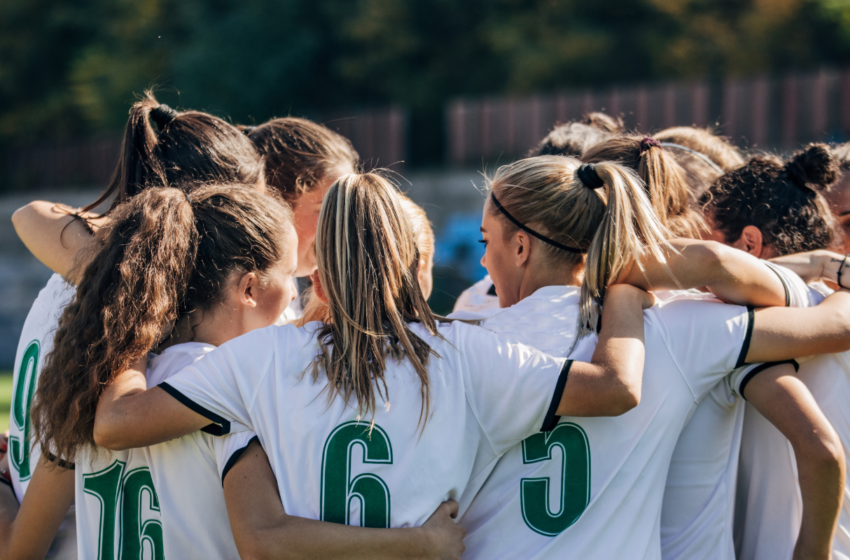
Teams are powerful.
Teams transform people.
I’m living proof.
And every child deserves the chance to experience what I did:
A place to belong.
A group to believe in.
A family outside their family.
That’s what I want for every player who wears a crest.
Not just to become better soccer players—
but to become stronger, braver, more honest human beings.
The world needs that.
And the game can teach it.
If we let it.


